LifeScienceHistory.com - Check us out on Instagram
Take Your Next Career Step with Lundback
History
Industry
Snapshot | Economy/Cost of Living
Education | Recreation & Entertainment
| Transportation
Geography & Climate
| Suggested Reading
List
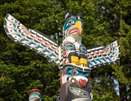 For thousands of years, what is now British Columbia was inhabited by the aboriginal First Nations peoples. These peoples developed societies around the abundant resources of the region and crafted magnificent art, such as elaborate totem poles. Many tribes settled here and became as diverse as their surroundings; nearly 200 still reside in modern-day British Columbia.
Europeans arrived in the region in 1778, when Captain James Cook of Great Britain arrived on Nootka Island and charted the region. Soon after, the Spanish arrived. In 1792, George Vancouver came and regained British control from the Spanish via the Nootka Convention. In 1794, the first white settlement developed in modern-day Fort St. John. The Hudson’s Bay Company eventually opened a trading post at Hudson’s Hope. Soon after, in 1808, Simon Fraser explored the mouth of the Fraser River. David Thompson explored the region via the Columbia River.
In 1843, Hudson’s Bay Company built Fort Victoria. Vancouver Island was established as a colony in 1849 after it was leased to the Hudson’s Bay Company. The gold rush on the Fraser River led to many settlers and boomtowns, and ultimately the creation of British Columbia as a colony by the British Government in 1858. In 1866, the colony of Vancouver Island joined with British Columbia, with Victoria as the capital. In 1871 British Columbia became part of Canada.
Other gold discoveries led to further settlement and exploration. The clash of cultures resulted in conflict between the new settlers and the First Nations peoples. Additionally, immigrants continued arriving from China, Japan, India, and Europe, leading to further tension. British Columbia experienced riots and two World Wars. Following these difficult years, however, the province experienced prolific success and growth, and gained strength through its diversity and its position on the Pacific Rim. Now the province is famous for its excellent quality of life.
Many famous individuals have called British Columbia their home. These include actors Michael J. Fox, Raymond Burr, James Doohan, Kim Cattrall, and Pamela Anderson; entertainers Bryan Adams, Nelly Furtado, Diana Krall, and Michael Buble; and scientist David Suzuki, among many others.
The future of British Columbia is enriched by its heritage and diversity, and promises to live up to its motto, Splendor sine occasu, or, "Splendour without diminishment."
Related Resources:
Back to Destination British Columbia